Precision machined technology meets timeless design
The culmination of my design experience, crafted into a product entirely my own.
Schulich School of Engineering
Calgary, Alberta

Custom Engineered
Form, Function, Feel
From Raw Stock to Finished Product
Bringing design, electronics, and manufacturing together in one build.

ENGINEERING
Continue below to see the full development of this project from the initial prototype to final design.


Component Breakdown


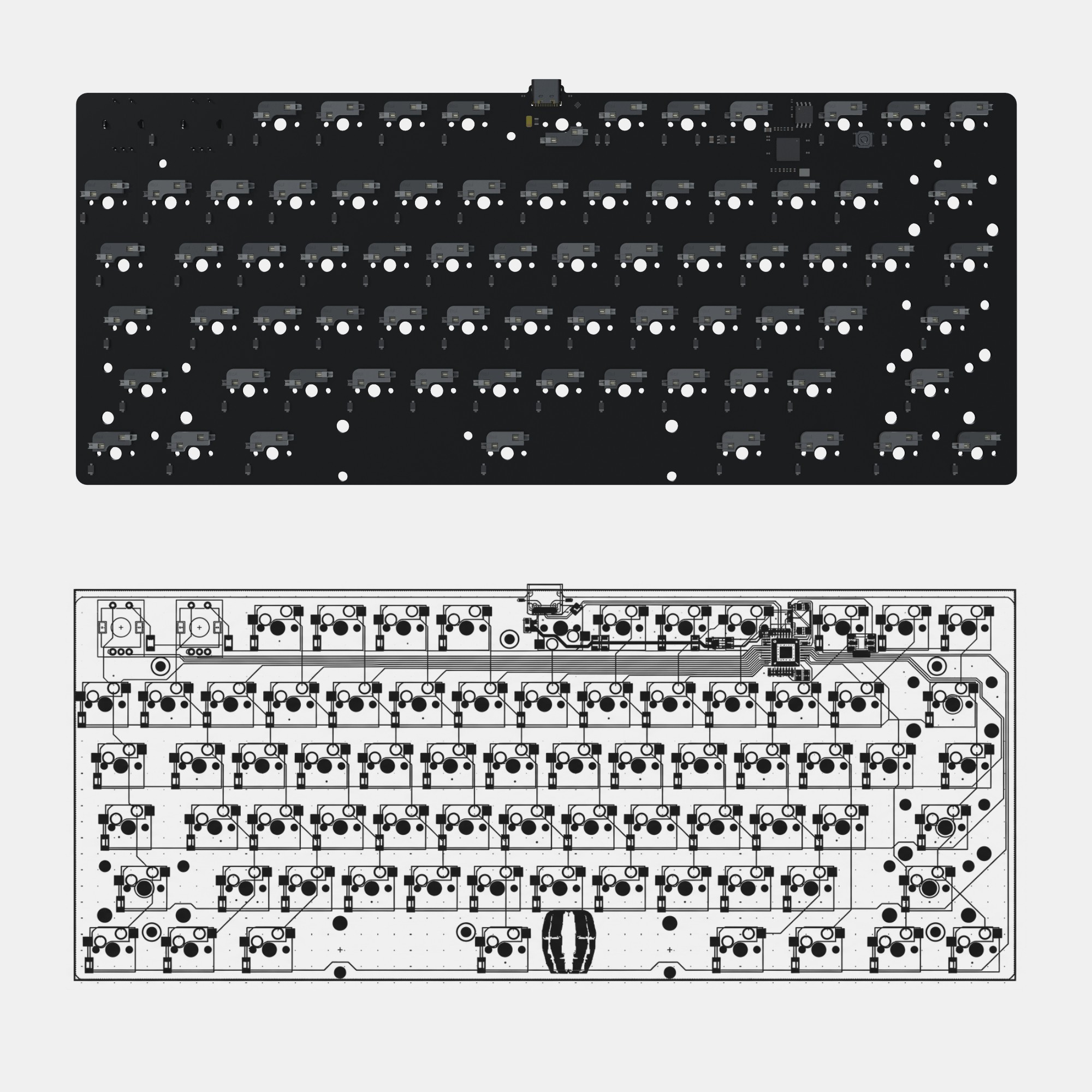
Diode Matrix
A keyboard diode matrix works like a grid of streets, with every key positioned at the intersection of a row and column. Rather than giving every key its own dedicated connection, the microcontroller rapidly scans each row to determine which intersections are active, significantly reducing the number of required inputs. Diodes act like one-way streets, allowing current to travel in only one direction and preventing it from taking unintended paths through neighboring switches. This prevents key ghosting and allows multiple keys to be pressed and accurately detected at the same time.
PCB Layout
Beyond the switch matrix, careful PCB architecture ensures reliable communication across every input. Traces were routed to maintain clean signal paths throughout the dense keyboard layout, while decoupling capacitors were positioned near critical components, particularly the rotary encoders, to suppress electrical noise and stabilize signals. An RP2040 microcontroller provides the processing power and GPIO required to rapidly scan the matrix, while diode isolation at each switch prevents unintended current paths and ensures simultaneous keypresses are detected accurately.

Final Keyboard (Top) PCB Rev. 3 (Bottom)


Revision One | Clamshell
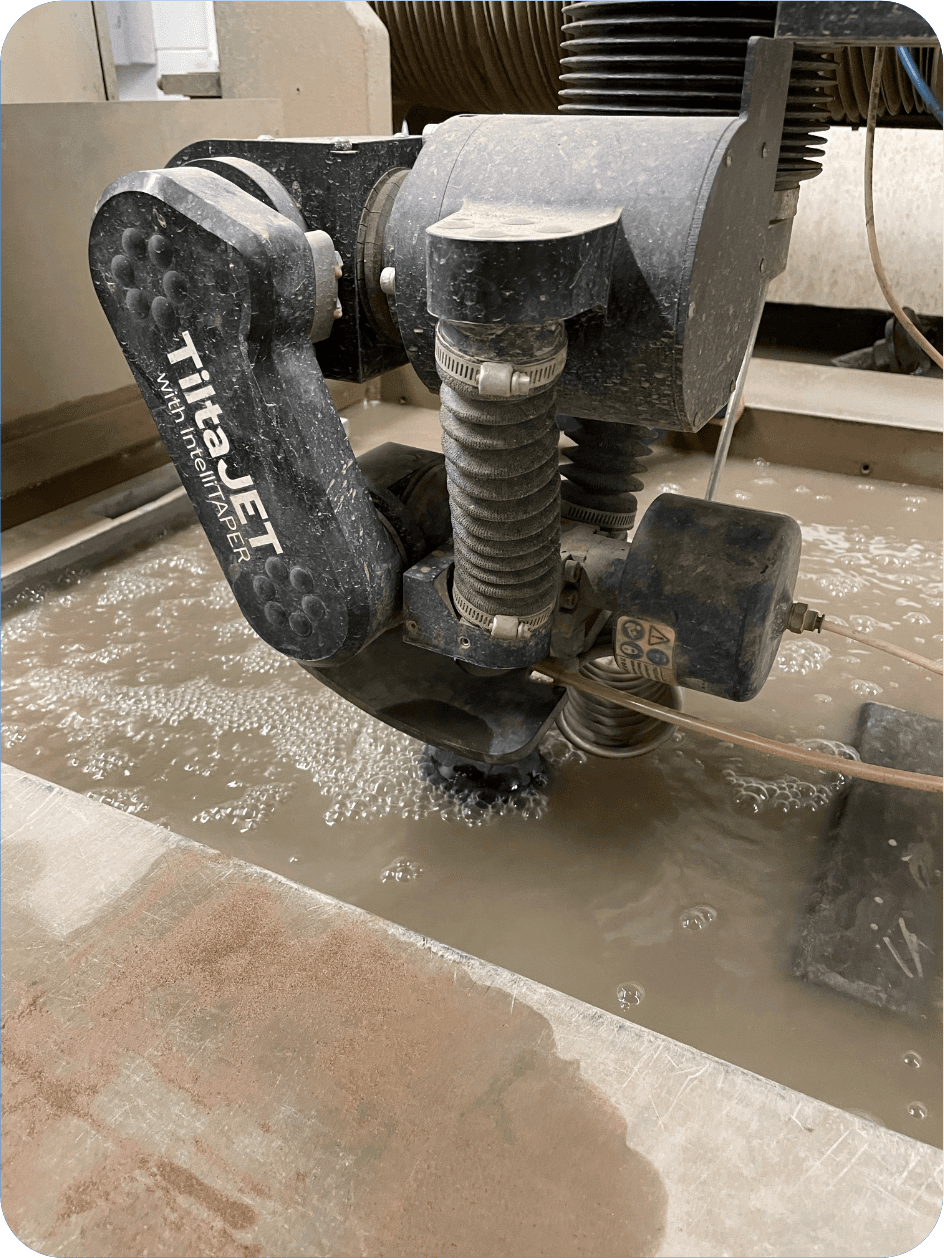
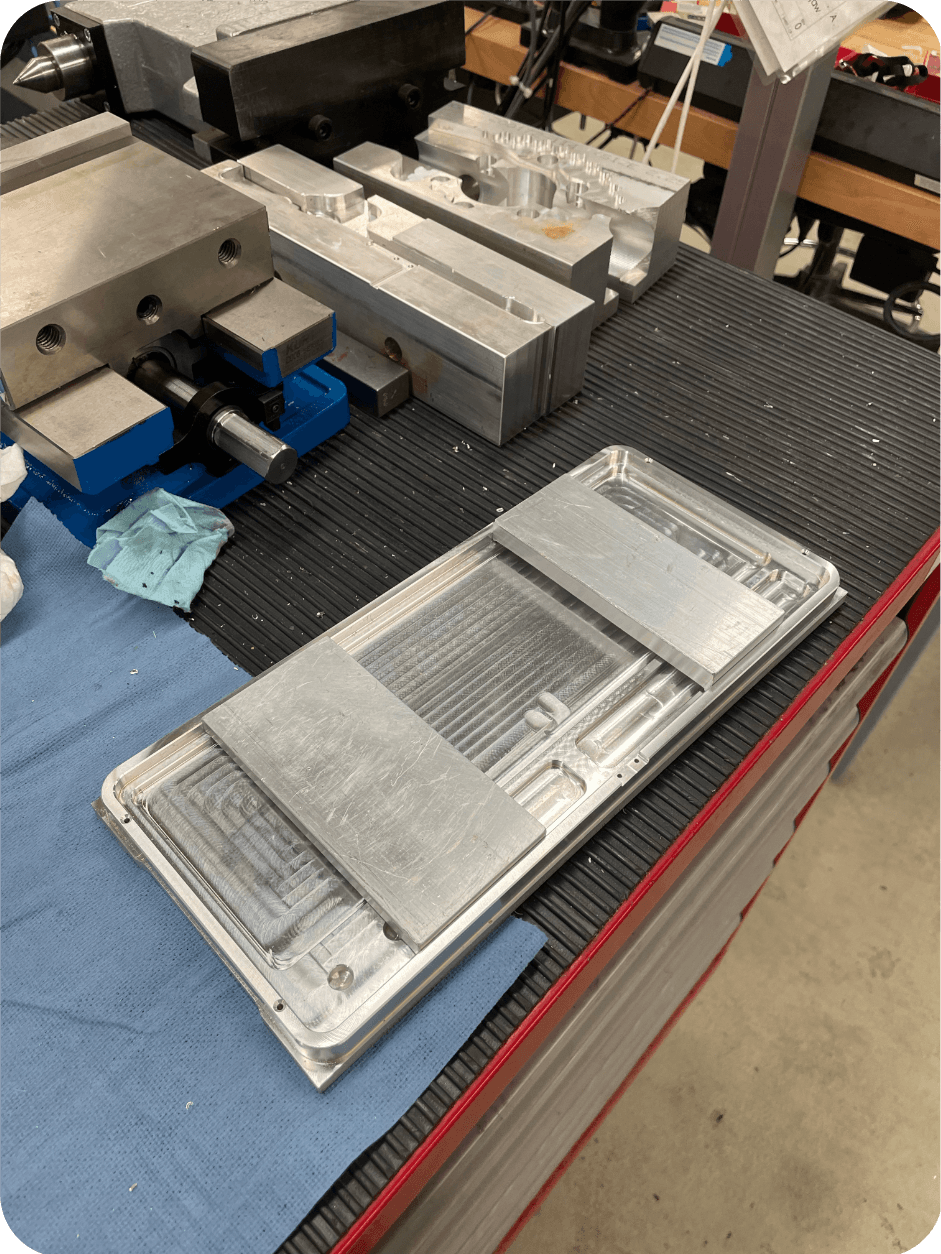
With multiple identical keyboards to manufacture, optimizing setup and repeatability became the first priority. Each enclosure began as waterjet-cut 6061-T6 aluminum for consistent stock geometry, while a dialed-in dual-vise setup established repeatable workholding and minimized the number of touch-offs required between parts.
Total Stock: 126 in³
Cutting Time: 3 Hours
Tools Required: 13
Total Setups: 4 (2 Per Half)
Rev.1 Problems
The T6 in 6061-T6 refers to its temper designation, indicating that the aluminum has been solution heat-treated and artificially aged to increase its strength. This process can introduce residual stresses throughout the raw stock, which become unbalanced as material is removed during machining, causing the part to bow or distort as these internal stresses redistribute.


Op1 Part Distortion
The release of residual stresses caused the aluminum to bow upward after machining, creating a flatness deviation along the mating surfaces of the two clamshell halves and preventing them from seating flush.
Beyond requiring excessive stock and additional machining time, the clamshell design proved difficult to manufacture consistently. With post-machining heat treatments unable to adequately correct the distortion, this flatness issue became the primary motivation for redesigning the enclosure.
Flexture Due to Clamping
What became apparent was that redesigning the enclosure alone would not eliminate bowing during machining. While high vise forces were needed to minimize chatter and maintain surface finish, removing much of the center material during OP1 left the walls susceptible to deformation. Custom aluminum braces were therefore thermally expanded to create an interference fit inside the OP1 cavity, supporting the enclosure against clamping forces during OP2 and significantly reducing distortion.


Revision Two | CNC-Optimized
To reduce part count, material use, and machining time by nearly 50%, the traditional two-piece clamshell was redesigned as a single machined enclosure. Integrating all components into one frame also simplified assembly, improved component alignment, and reduced tolerance stack-up.

Bent sheet metal design utilized to reduce cost. (SendCutSend)

Enclosure CNC program optimized to eliminate costly operations and setups.

Cerakote layer applied to masked-off enclosure to eliminate wear concerns.

GD&T used to ensure that manufactured components fit in a worst-case stackup.
Simplifying Stackup Assembly
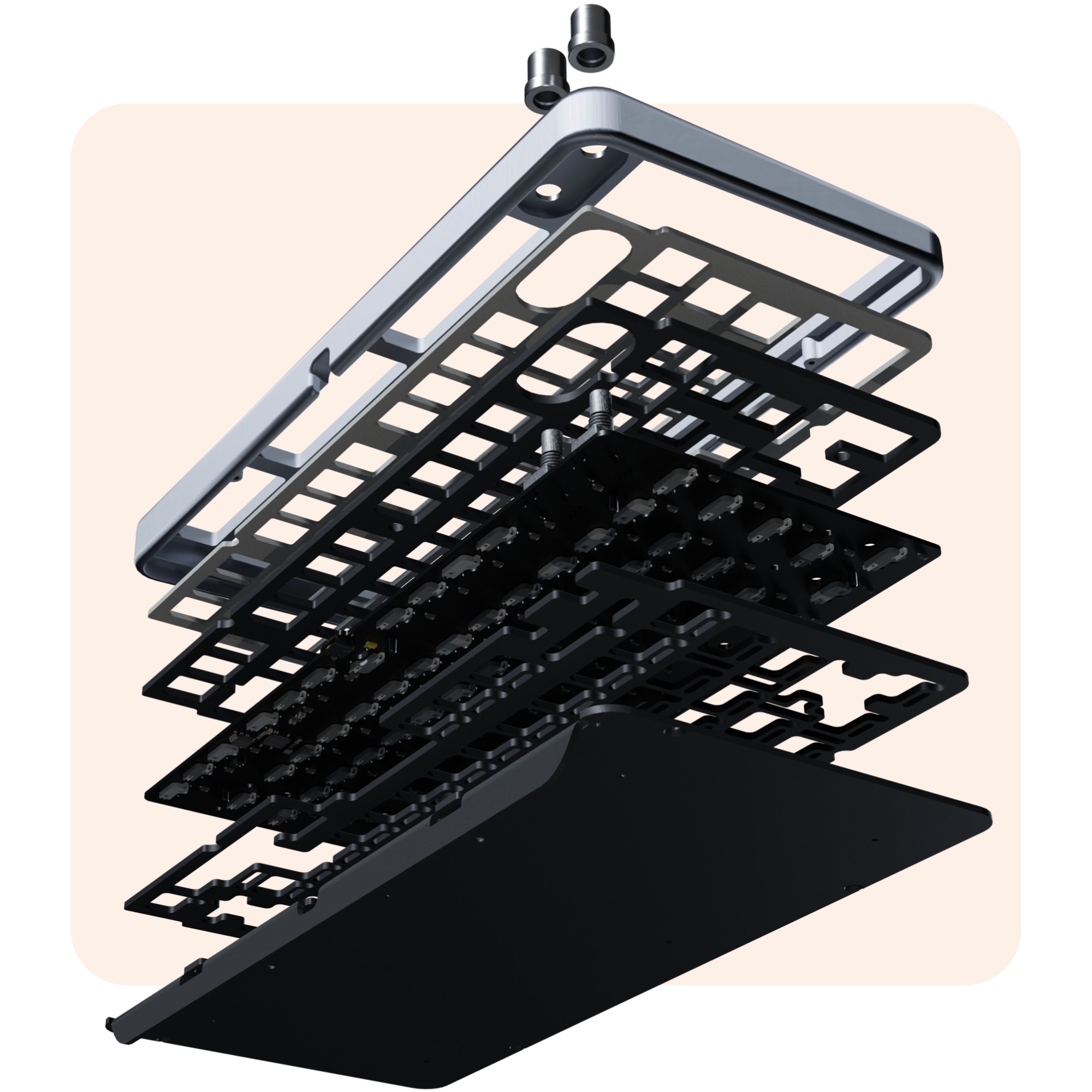
The redesigned enclosure allows every internal component to stack within a single machined frame. Integrated indexing features along all four sides locate each layer and constrain both translation and rotation, creating a repeatable assembly without requiring additional alignment hardware or complex positioning during installation.
These indexing features also serve a second purpose, with their upper surfaces providing material for integrated M2.5 threaded holes. This allows the sheet-metal backplate to fasten directly to the enclosure while sharing the same structural features used for alignment, minimizing additional material and keeping the keyboard footprint as compact as possible.
Resisting Flexture in a Thin Form Factor
The powder-coated steel backplate adds rigidity while maintaining a thin profile. Assuming ideal load transfer through the screw interfaces, its higher Young’s modulus allows it to carry a greater share of the bending stress than the aluminum enclosure. A bent perimeter flange further increases the second moment of area by distributing material farther from the neutral axis, significantly improving resistance to bending without adding substantial thickness.


Fabrication & Assembly
Beyond machining, each component was designed for efficient manufacturing while preserving the fit, feel, sound, and satisfaction of a premium keyboard.

Testimonials
User Experience
"Everything was done professionally here from setups to the tooling chosen. Anthony's strong understanding of manufacturing principles indicates exceptional potential for continued growth within the machining and manufacturing industry."

Jason Steinburg | Machine Shop Manager
Testimonial
"I intially advised him not to pursue this (class) project due to the complexity of fabrication and analysis involved, but the result is better than I could have ever anticipated. This work will be used as the gold standard for classes to come."
Dr. Deyi Xue | CAD & CAM Professor
Testimonial
"What left me most dissapointed with this project was having to go home to use my standard low quality plastic keyboard at home after having had the chance to try out this one."
Rohan Sharma | User
Testimonial
"It was really cool to see this the major milestones that accompanied this project while working with Anthony during capstone in real time. All the time and effort really does show in the end product."
David Menning | User
Testimonial
Final Assembly Gallery


Hot-Swappable
When you want a change of pace—switches can be changed on the fly.
Software Compatible
Compatible with major open source configuration softwares. (QMK, VIA, Vial)
Craftsmanship
Thoughtful design that reflects the time invested.
Thank You
A special thank you to Jason Steinburg at the University of Calgary machine shop for allowing me the time, material, and opportunity to pursue this project along with all other personal projects. I would also like to thank the team at BlackBox Customs for helping me personalize this project.